
Winter tire rules near Abbotsford
In BC, winter tires or chains are required on most designated highways from October 1 to April 30. On some highways that don’t go through mountain passes or high-snowfall areas, the requirement ends March 31. The routes are marked with signs, and drivers who don’t comply can be turned away and fined.
The province says drivers aren’t required to use winter tires in many areas along the coast. That changes once you head east. Based on the province’s South Coast map:
- Highway 1 through Abbotsford and Chilliwack to Laidlaw, and Highway 11, are not designated.
- Highway 1 from Laidlaw east through Hope and the Fraser Canyon is designated from October 1 to March 31.
- Highway 5 (the Coquihalla) and Highway 3 from Hope to Princeton are designated from October 1 to April 30.
- Highway 99 from Horseshoe Bay to Pemberton (the Sea to Sky) is designated from October 1 to March 31.
Routes can change, so check the province’s winter tire and chain routes page before a trip.
What is the recommended winter tire in BC?
The mountain and snowflake tire. Look for the symbol on the side of the tire: a three-peaked mountain with a snowflake inside. These tires have passed a snow traction test. BC’s Ministry of Transportation and the RCMP recommend them for regular highway travel.
Winter tires also need at least 3.5 mm of tread to count as winter tires in BC.
Transport Canada says all-season and summer tires start to lose elasticity and grip below 7 °C, while winter tires keep their grip at much lower temperatures. It also recommends putting winter tires on in sets of four.
Everyday tire care
Pressure. Check it once a month, including the spare, when the tires are cold. The right pressure is on a label on the edge of the driver’s door, the door post, the glove box or the fuel door. Tires lose about 1 psi for every 5 °C drop in temperature, and about 2 psi a month on their own. Transport Canada says running 8 psi low can cut about 15,000 km off a tire’s life and raise fuel use by 4 percent.
Tread. BC’s legal minimum for a passenger vehicle is 1.5 mm. A tire can still be legal for everyday driving and be too worn to count as a winter tire, which needs 3.5 mm.
Wear. Wear on the inside or outside edges can point to an alignment or suspension problem. Our steering and suspension page explains the signs.
Rotation. Michelin suggests rotating tires every 8,000 to 12,000 km, or every other oil change, while following your vehicle maker’s guidelines.
Age. Michelin says tires should be inspected at least once a year after five years of use, and replaced ten years after they were made, whatever they look like. The last four digits of the DOT code on the sidewall give the week and year the tire was made. A code ending in 3520 means the 35th week of 2020.
At Hub Motor Service
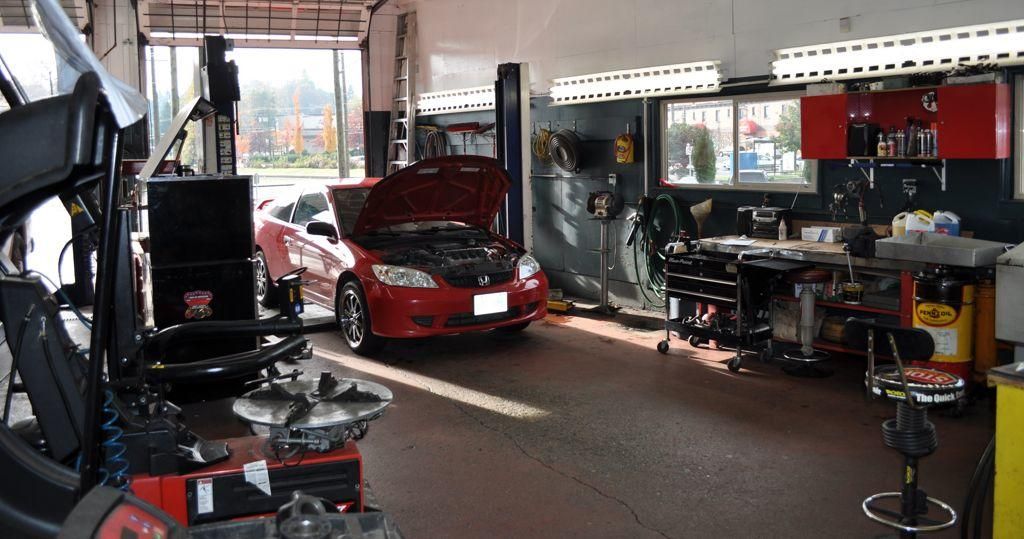
We sell quality brand-name tires, and we’re an authorized Michelin, BFGoodrich and Uniroyal retailer. BFGoodrich and Uniroyal are both Michelin brands. Our five-bay shop is at Essendene Avenue and Gladys Avenue, in downtown Abbotsford, and our team includes Myron Warkentin, Michael Warkentin and Corey Polson, all fully licensed Red Seal Automotive Technicians.